
Public Seminar: American Democracy Under Trump, What Indonesia Could Learn?
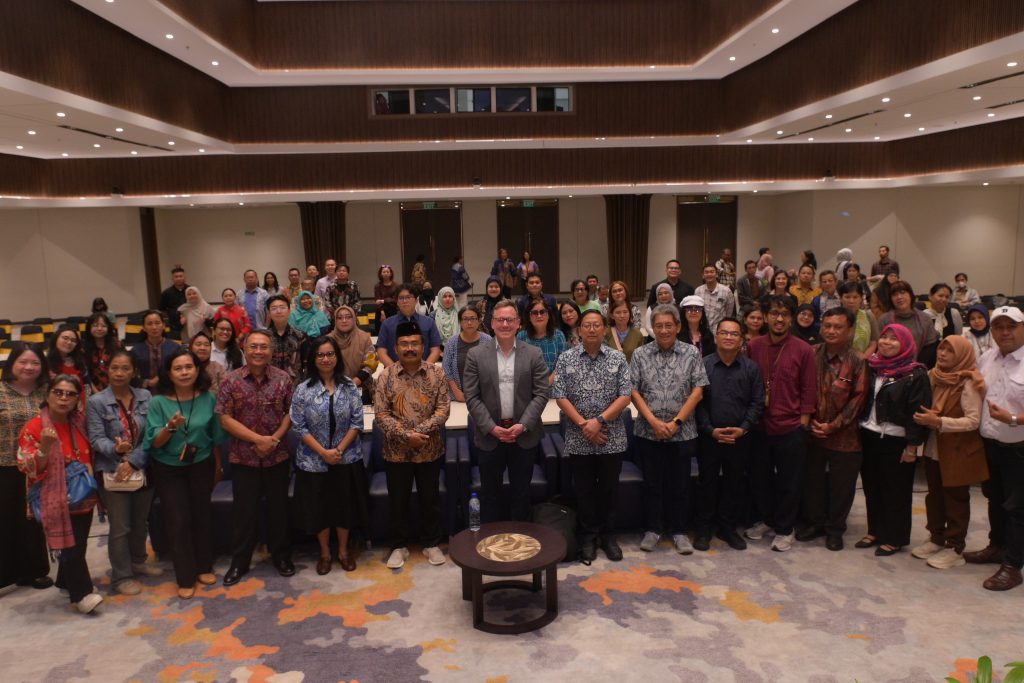
Atma Jaya Institute of Public Policy (AJIIP) held a public seminar on Wednesday, 7 January 2026, titled “American Democracy Under Trump, What Indonesia Could Learn?” at Universitas Katolik Indonesia Atma Jaya. Supported by the American Institute for Indonesian Studies (AIFIS), the discussion featured Prof. Thomas Pepinsky, Walter F. LaBer Professor of Government and Public Policy at Cornell University, and was moderated by Andina Dwifatma, Ph.D. – a lecturer at Atma Jaya. This seminar bring us to reflect on recent spreads in U.S. democracy and its relevance for Indonesian. The event opened with welcoming remarks by Salvatore Simamata, Ph.D. – Director of AJIPP, who emphasized the importance of comparative democratic analysis amid increasing global political uncertainty. Prof. Pepinsky then outlined four key implications of American democracy: presidential democracy is difficult, leaders matter, performance matters, and political regimes create lasting legacies. Together, these points highlight how leadership style, institutional design, and policy choices shape democratic outcomes over time. Prof. Pepinsky explained that presidential systems, such as those in the United States and Indonesia, grant presidents significant authority while limiting accountability mechanisms between elections. As a result, the character of individual leaders, the advisors, and political groups surrounding them, plays a critical role in shaping governance. Drawing on examples from recent U.S. administrations, he argued that political outcomes cannot be understood solely through institutional structures, but must also consider personal leadership dynamics. The discussion also emphasized the importance of government performance, particularly economic conditions, in sustaining democratic legitimacy. According to Prof. Pepinsky, public perceptions of economic performance strongly influence voter behavior, often outweighing political narratives or rhetoric. In addition, he noted that democratic challenges today are shaped by long-term institutional legacies, including the expansion of executive power inherited across administrations. Concluding the seminar, participants reflected on how these lessons resonate with Indonesia’s own democratic experience. The discussion underscored the need to critically assess presidential leadership, policy performance, and institutional legacies in order to strengthen democratic accountability and resilience in Indonesia.